Lauren Kate, author of the richly envisioned, best-selling YA fantasy Fallen series, has applied her talent for world-building to What’s in a Kiss, a literary romance for adults. As in Fallen, Kate’s fast-paced plot manages tension and expectations as it moves across vividly imagined settings, keeping the reader turning the page.
In What’s in a Kiss, down on her luck, Olivia takes to heart her role as maid of honor to her BFF, designing a bachelorette and wedding of Masha’s dreams. The catch? The best man is Jake Glasswell, a famous YouTuber and a name from Olivia’s past, who plans to attend with his equally famous plus-one. Jake, who competed with Olivia in high school, may not be “the one who got away,” but he’s a symbol of all that’s gone wrong in her career and love life. Olivia is haunted by an intimate moment with Jake outside of prom where they shared their aspirations, then almost kissed. A family tragedy occurs not long afterward, and grief-stricken Olivia declines her acceptance to Juilliard. Now, ten years later, she’s barely getting by, riffed from her position as a drama teacher and picking up rides as a part-time Lyft driver. When ever-attractive Jake slides into the back of her Nissan LEAF, it’s less a meet-cute than a humiliating reminder of her unrealized dreams despite his hypnotic good looks:
“For me, the worst part is Glasswell’s eyes. They’re a sleepy, grassy green, and deceptively, cruelly kind….it’s like I’m back on the curb outside prom.”
Olivia struggles with conflicted feelings at Masha’s wedding when an earthquake-rattling shake signals to the reader a shifting of reality. Facing Jake, she realizes something has changed:
“He’s not shooting eye daggers anymore. He’s looking at me kindly. Affectionately. He’s looking at me like a man in love.”
A blip of fate has swapped the trajectory of their lives. In this timeline, Olivia is the celebrity, acting on the popular Zombie Hospital, and Jake is her adoring husband who has sacrificed for love, for their marriage. Olivia explains her split-screen existence, her new “High Life,” with a reference to the film Sliding Doors, though she is more a Dorothy in Oz, where the same cast of characters from her “Real Life”—including Gram Parsons, her dog—appear in unexpected ways. As she moves through this alternate world, the scenery change offers her a chance to shift perspectives and relive misunderstandings between teenage Jake and Olivia with empathy and a clear eye.
Kate’s first-person POV gives the reader a deep understanding of Olivia, a close witness to the external path leading her through an emotional journey. When she leans into the “high life,” she feels the possibility of replacing fear with self-assurance:
“I pick up the wet suit and a sense memory washes over me: the give of the material, the heft of its weight. In this world I’ve worn this many times, with confidence and poise…I can do this. I can go out in the ocean and get up on this board.”
As befitting a literary romance, Kate keeps both characters on a slow build. Thrown together as husband and wife, their proximity highlights Olivia’s growing passion for a man she’s professed to hate. She repeatedly resists these feelings, which distract from her Dorothy-esque quest to return to her real life:
“I’m overcome with my desire to reach out and touch him. I pin my hands under my back and let the sunrise sweep over his features. It’s not like I didn’t know Jake was gorgeous before. But after last night, he looks different. I see the man behind the beauty, and he’s kind, with depths I hadn’t imagined.”
In the novel’s acknowledgments, Kate professes her admiration for Laurel Canyon, her “twisted, twisting and enchanting home,” giving the novel a keenly felt sense of place:
“There’s no better time to drive Mulholland than at night, no better view than the Valley’s distant, waving trees making house lights twinkle…at the far edge of this dazzling expanse, the San Gabriel Mountains tear the horizon into sheaths.”
This deep knowledge of LA is reflected in her characters’ voices, in Olivia’s mother’s advice that “an Angeleno is never alone in pain or pleasure,” and filtered through Olivia’s love/hate relationship with her hometown: “I try not to know these things, but I think they get absorbed through the LA air—a hybrid of smog, envy, and self-consciousness.”
Kate pulls off a special magic in the story’s end. Romance readers who expect certain conventions will find pleasure in the denouement, yet the novel resists erasing Olivia’s past life and tying up her “real life” in a neat bow. The message imparted is one of optimism: whether or not the past can be unwritten, the future remains to be crafted. Joy is always a possibility when guided by the wisdom of learned experience and careful reflection.
“I don’t know what’s going to happen when I leave here, but I do know—far better than I could have a week ago—what intimacy means. I’ll never settle for anything short of this.”
Lauren Kate is the internationally best-selling author of nine young adult novels, including Fallen, as well as The Orphan’s Song, her debut adult novel. She received her MA in Creative Writing from UC Berkely, and teaches courses through Stanford’s online creative writing program.
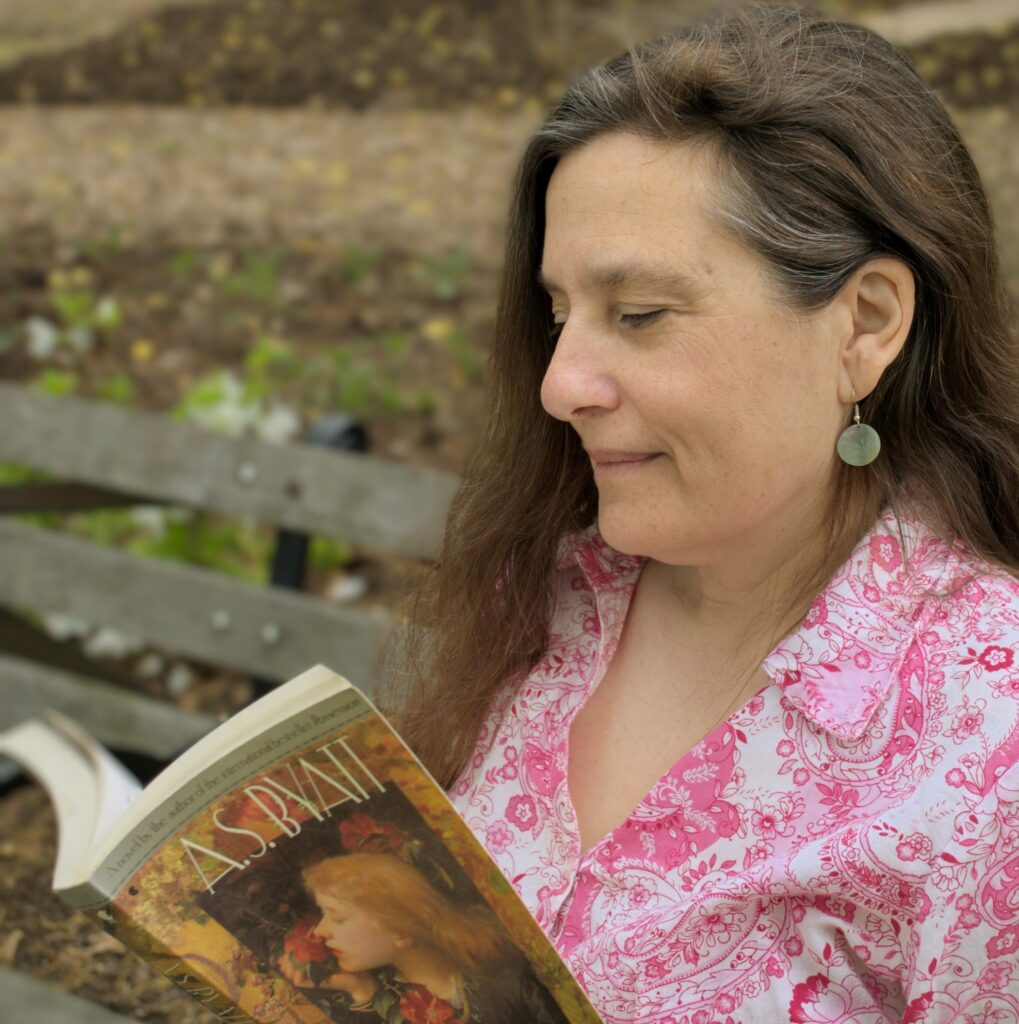
Mary Sophie Filicetti’s fiction has appeared in The MacGuffin, Montana Mouthful, Every Day Fiction, Nightingale and Sparrow, The Phoenix, and is pending in Red Rock Review. She holds an MFA in Fiction from Spalding University and is a first reader at Little Patuxent Review. Tweeting at @marysfilicetti.