Reviewed by Ben Cooper
From unthinkable expanse to knowable frontier, from a land of vagabonds and unruly misfits to a place people have learned to call home, the American West has always been a place of misunderstanding and wild fantasy. Calypsee, Utah—the enigmatic setting of Ryan Habermeyer’s third book Necronauts—is no different. Published by Stillhouse Press and released March 17th, Necronauts presents a story of a boy as told through ninety-five intimate yet charmingly bizarre obituaries—ranging from a Rodeo Clown who succumbs to the despair of his natural face to the cantaloupe queen who dies after overzealously eating the fruit that defined her rule.
At its core, Necronauts is the story of a boy who wants nothing more than to escape the apparent claustrophobia of Earth’s gravitational pull. A dentist finds the cosmonaut boy sleeping in an old Frigidaire and, over the course of the book, tries to help the boy launch himself into the sky via trebuchet. Nobody knows what the boy looks like because he wears a cracked space helmet—or is it a fishbowl—over his head, but this doesn’t stop the dentist from forming a father-like bond with the cosmonaut boy. This relationship is both the emotional and philosophical fulcrum of the story, and Calypsee’s obituaries serve to carry us through the dentist and cosmonaut boy’s attempts to leave this world.
The formal, short-form experimentation of Habermeyer’s previous work is especially brilliant in Necronauts, providing readers the chance to switch focus from the absurd to the serious in a kaleidoscopic trip through the town. Calypsee’s obituaries constantly unfold in an attempt to understand themselves, and in this pursuit, the author delivers a remarkable effort to define a small town through the feverish memory of those who have left it. This makes the father-son story Habermeyer really wants to tell feel reflective, forward-facing, whimsical, grounded, hopeful, and hopeless all at once. For every moment of gorgeous lyricism about the value of hope and belief in Calypsee, one cannot escape the underlying realization that, for many of the town’s inhabitants, the dreams that give them hope are the same dreams that wind up killing them.
Some of Calypsee’s obituaries end with the elegant grace of poetry, some leave you itching for more, and some lull you into a state of expectation only to break you out with one of Habermeyer’s wily left turns. All of Necronauts’ vignettes, however, create a complicated portrait of a town the depth of which I haven’t experienced except, perhaps, in Anderson’s Winesburg, Ohio or Joyce’s Dubliners. Unlike Anderson or Joyce, though, Necronauts carries a certain sense of absurd experimentation I can only describe as in the vein of Vonnegut. Suffice to say, Habermeyer’s book is brimming with strange, uncanny moments of revelation that stick around far beyond the closing of the book’s back cover.
While the benefits of Habermeyer’s formal experimentation are clear throughout Necronauts, it should be noted that the overarching story, itself, is hard to pin down at times. Often, Habermeyer will build momentum in the central story only to shift focus to the next poor soul who has passed away. This sort of shifting structure has its clear purpose, but I would be lying if there weren’t moments when I wanted to live in a moment slightly longer than the form allowed. Despite this slight drawback of the book’s formal structure, I found the individual pieces of the book to be paced wonderfully, leading, eventually, to a gorgeously wrought final sweep.
By the middle of the book, we get more vignettes of the cosmonaut boy as he waits for the mothership to take him, we see a deeper picture of the relationship between the dentist and his makeshift son, and we begin to see the effects that hope has wrought on the people of this town. In the end, Habermeyer paints Calypsee, Utah with all the absurd weight required to represent the desperate and whimsical vision these characters have of the world they inhabit. As Habermeyer states in “Sure as the Dust That Floats High in June,” “Hope is a drug, my little donkey, it can give you wings or hollow you out like a bowl.” Hope plays a central role in a world where reality has no choice but to resemble fever dreams, and when you live in a town like Calypsee, the absurd chaos that ensues is the only thing left to believe in.
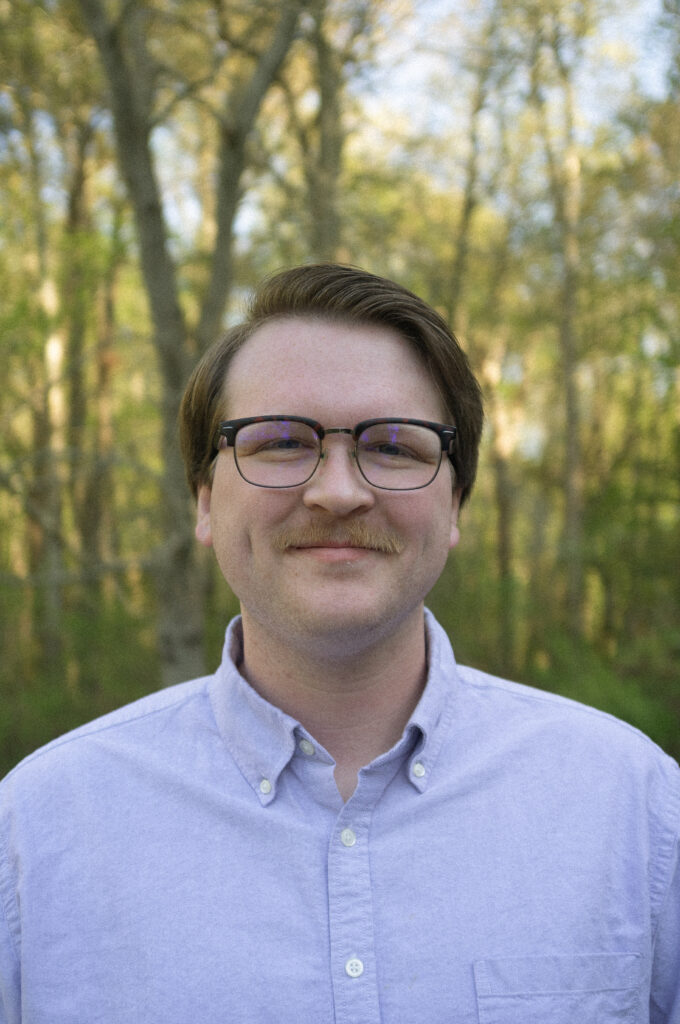
Ben Cooper is a masters student studying creative writing at Salisbury University. He is the winner of the 2025 AWP Intro Journals Award and works as the Managing Editor at 149 Review. His work is published or forthcoming in Colorado Review, Guernica, The Penn Review, The Shore, swamp pink, and more.